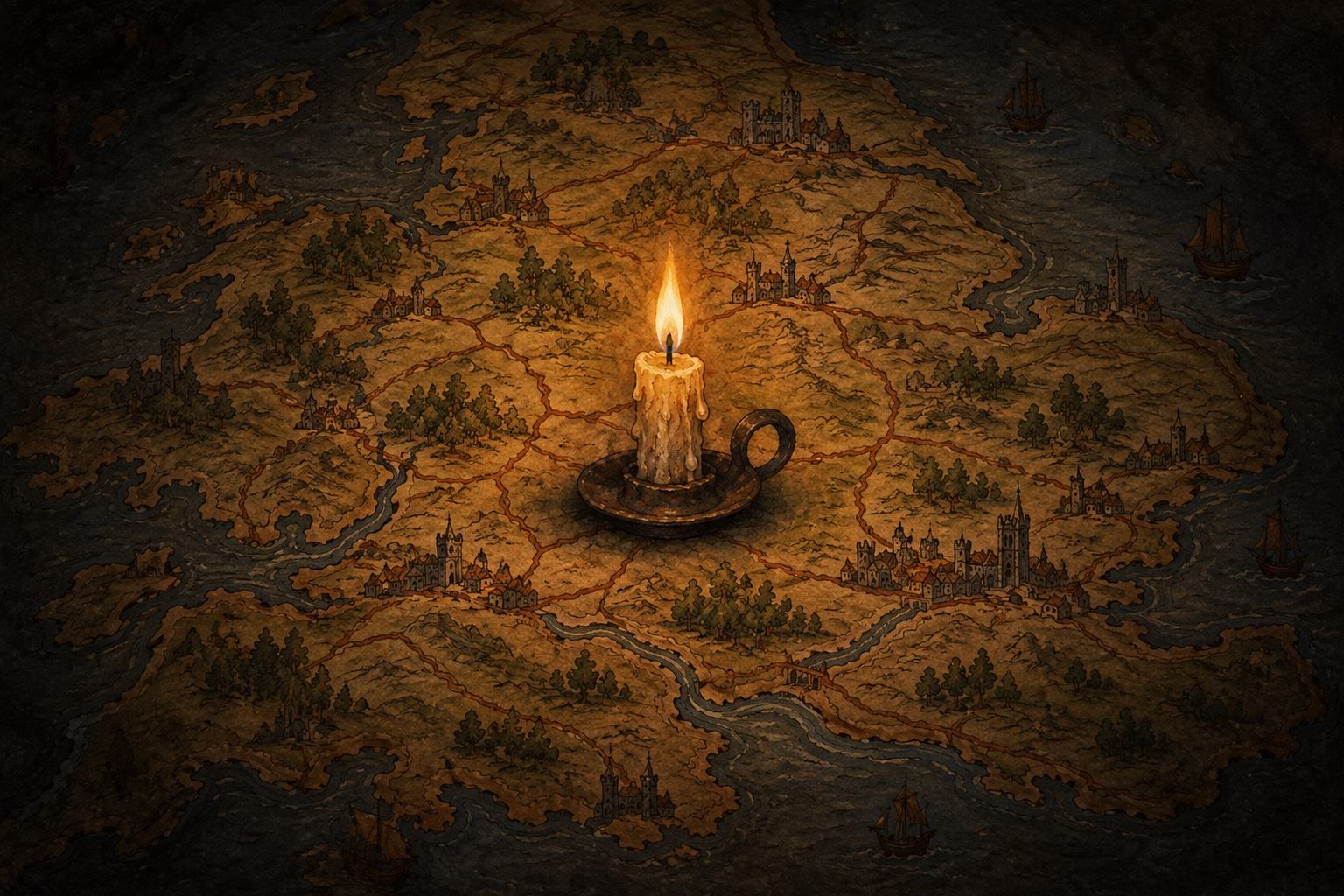
England · 1410
A Heresy,
Spreading
You are the idea. The Church and the Crown are looking.
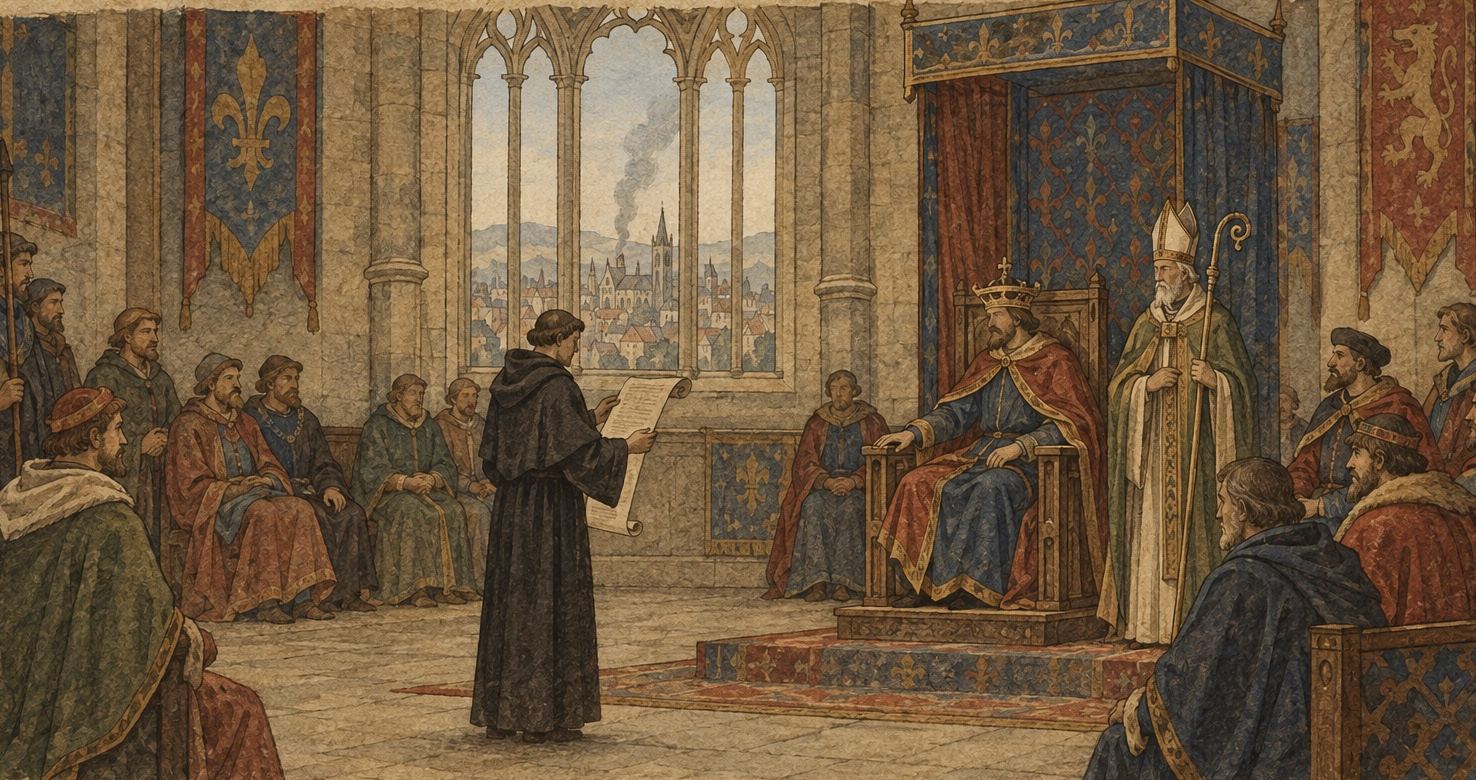
England, 1410. Speaking against Church teachings can lead to death by burning, and the idea is already loose. Send your sowers, the believers who preach your words, from county to county, choose what they teach, and buy cover before you need it.
Coming soonto the App Store, for iPhone
See how it plays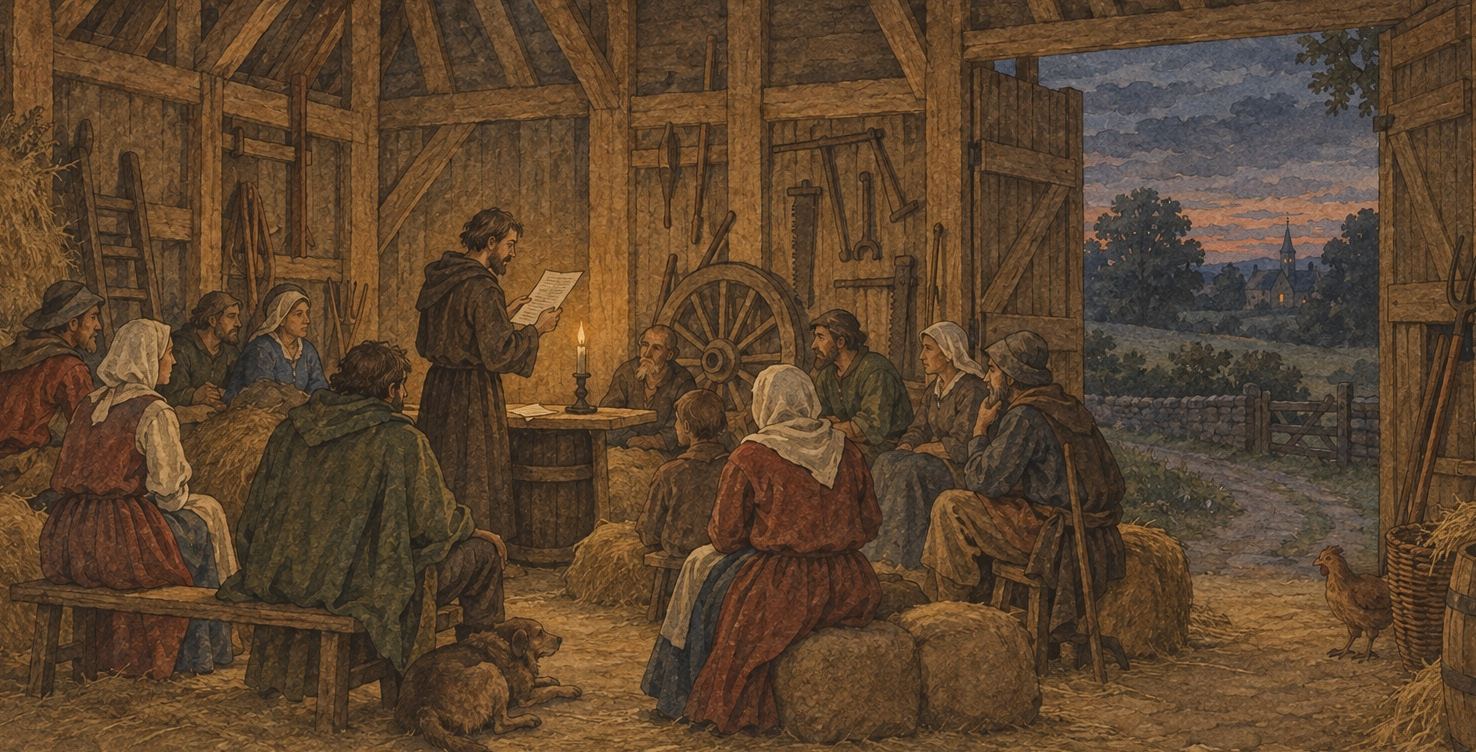
The game
You are not the preacher. You are what is preached.
Its first teacher died in his bed. His words did not, and you are those words. Your sowers carry you from county to county, and wherever one stands and preaches, belief grows.
Every tenet you teach wins people and angers someone. The Church follows doctrine and the Crown follows money; each keeps a case file on you, and both are looking. Teach boldly and you spread fast, but they come sooner. Teach gently and you grow slowly, and the years must do the work.
Your score is how deeply the belief has rooted, and whether it outlasts the people who carry it. Root deep enough, with a way to go on without its sowers, and it will be called a church, not a heresy.
They stopped calling it a heresy. They started calling it a church.
How it plays
In a full game: nine counties, 250 weeks, and two powers looking
Beside the map, five buttons hold your teaching, your roads, your cover, the powers’ case files and the news.

BeliefChoose what you teach.
Each tenet wins people and angers someone: some are quiet to both powers, some loud to the Church, some loud to the Crown. An angry county takes to one teaching, a county that can read to another.
He owned one coat. The bishop owns a county.
Christ Was Poor 
TravelOpen the roads.
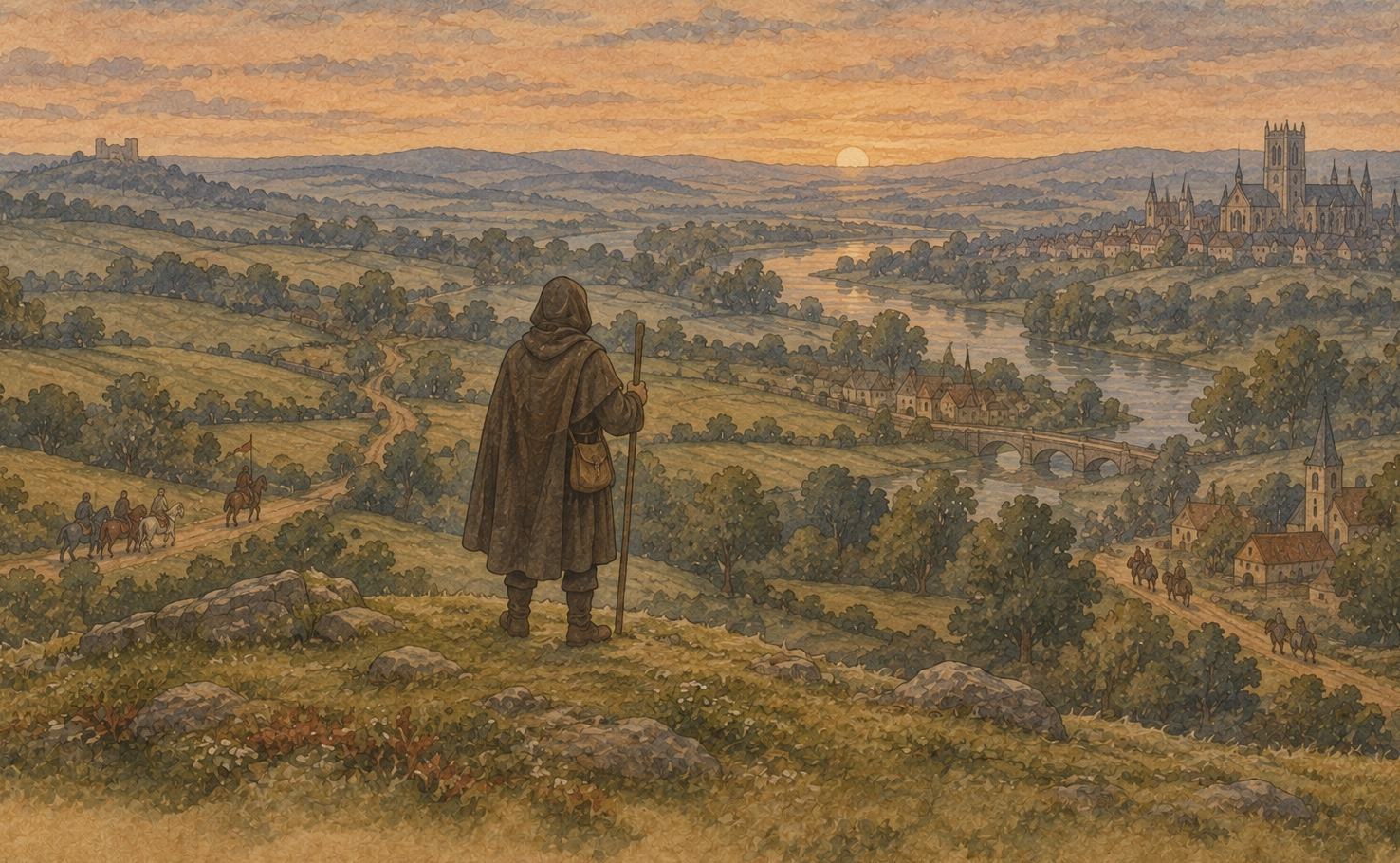
A sower takes a week to walk to the next county. Belief spreads by itself along the roads you open: the market roads, the pilgrim roads, and in time the ships. Handbills can reach counties that read, even with no road between. Each way leaves a different kind of trace.
A pilgrim can go anywhere in the kingdom, unnoticed.
The Pilgrim Road 
CoverBought before it is needed, never after.
Some cover slows a power’s case; some means less of what you do is written down. A house to meet in, a priest who looks away, a book buried where the searchers stand.
Let them see you take the bread. What you believe on the walk home is for you to know.
Sunday Faces 
Case fileTwo powers, five moves each.
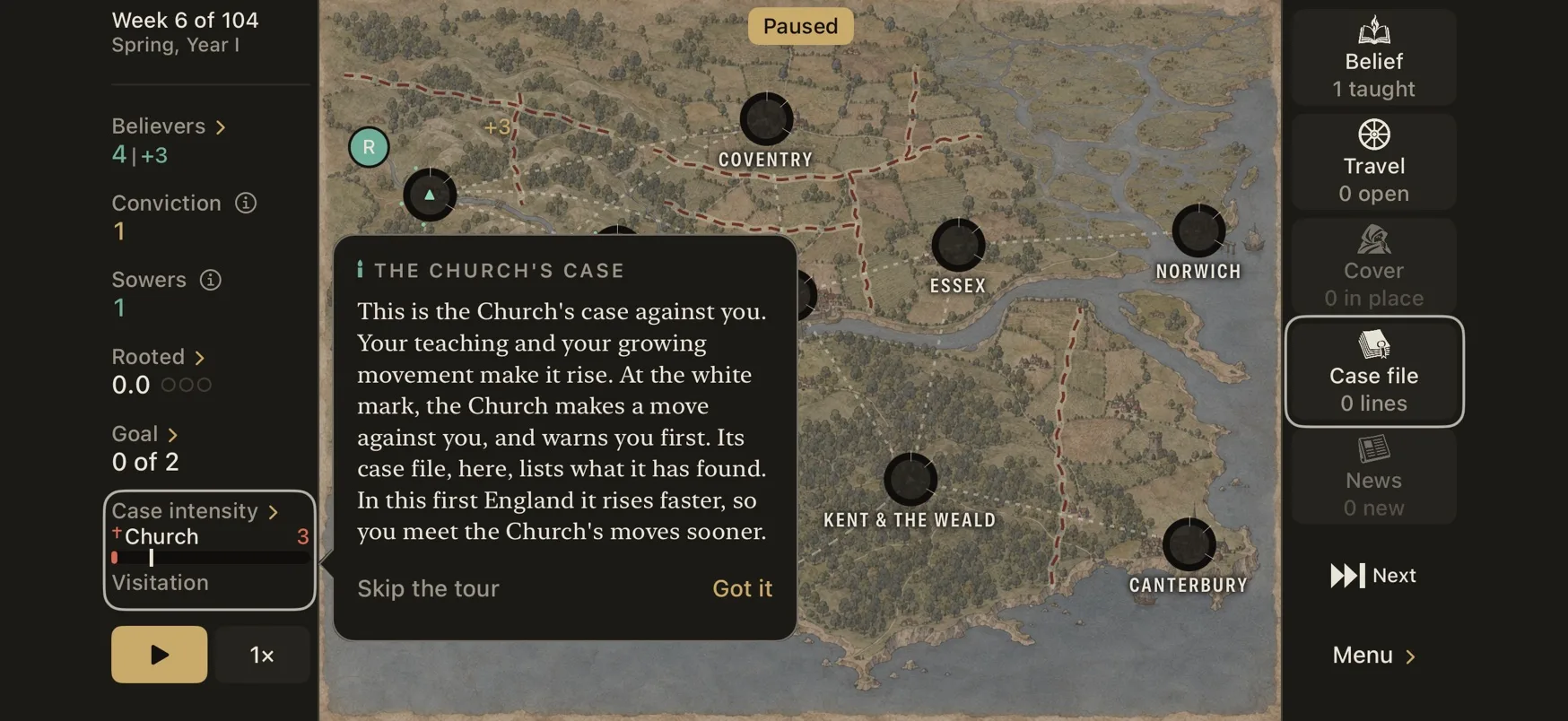
The Church and the Crown write down what they learn of you, county by county, and make five moves, each worse than the last. Every move is announced. For most of them your people choose how to meet it, from going to Mass, scattering, holding or giving someone up, as the move allows.
Each power makes its moves, each harsher than the last, and announces each before it lands.
How to play 
NewsThe kingdom asks questions.
Every few months the kingdom puts a question to you, and the clock waits for your answer. Some questions remember: what you answered comes back months later, from the same people, as an opportunity or as a setback. News keeps track of it all.
It has rained for a year. The barley rotted in the fields in three counties, and the abbey has not lowered its rents.
A Wet Year
There is no single right way to play. Most runs lean one of three ways, with your words spreading quietly, in writing or loudly, and many of the strongest runs follow more than one path.
Challenges set a fixed run with one thing asked, and a patron, earned in your own runs, can help a later one.
Each week, one England and one Bohemia are the same for every player, each with its own leaderboard on Game Center.
Screens
From the game
Tap a screen to see it larger.
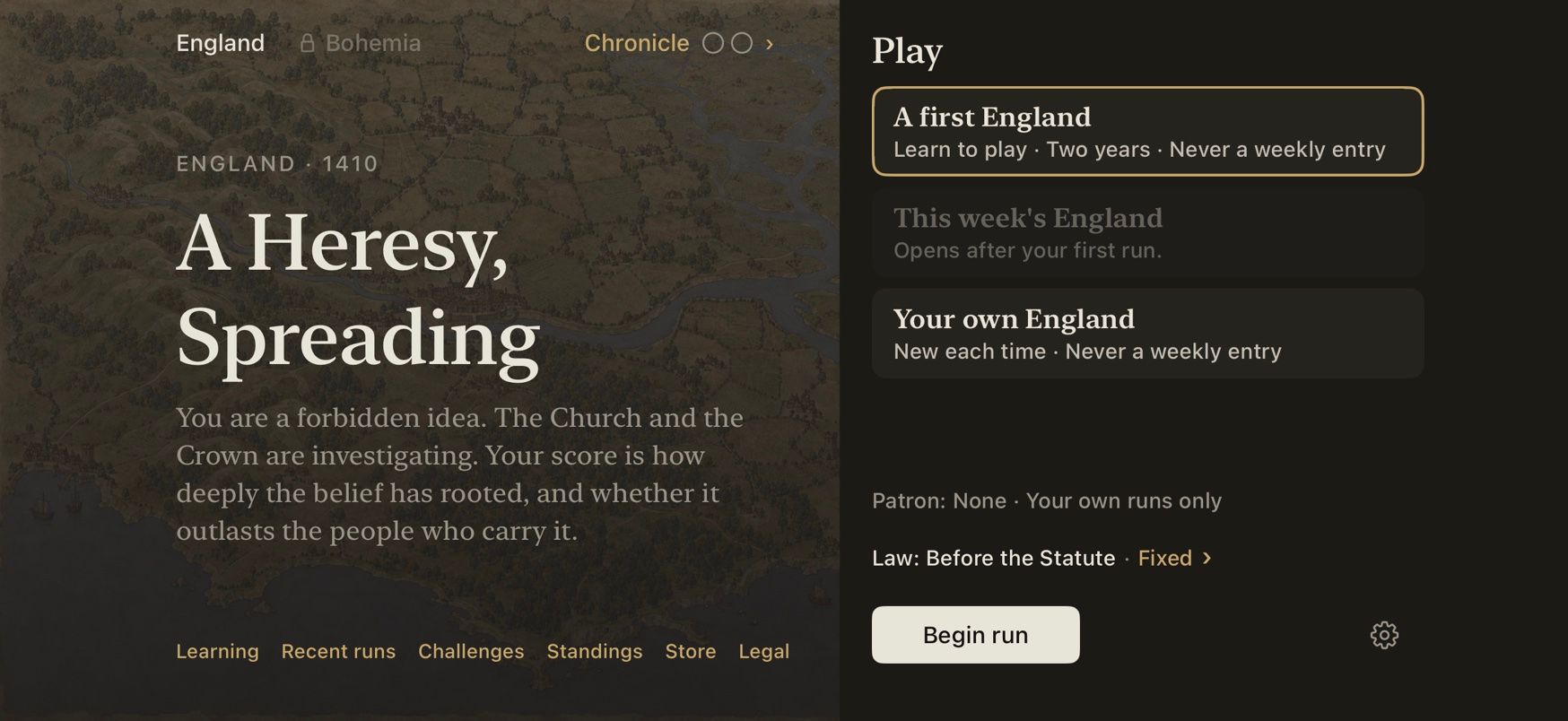
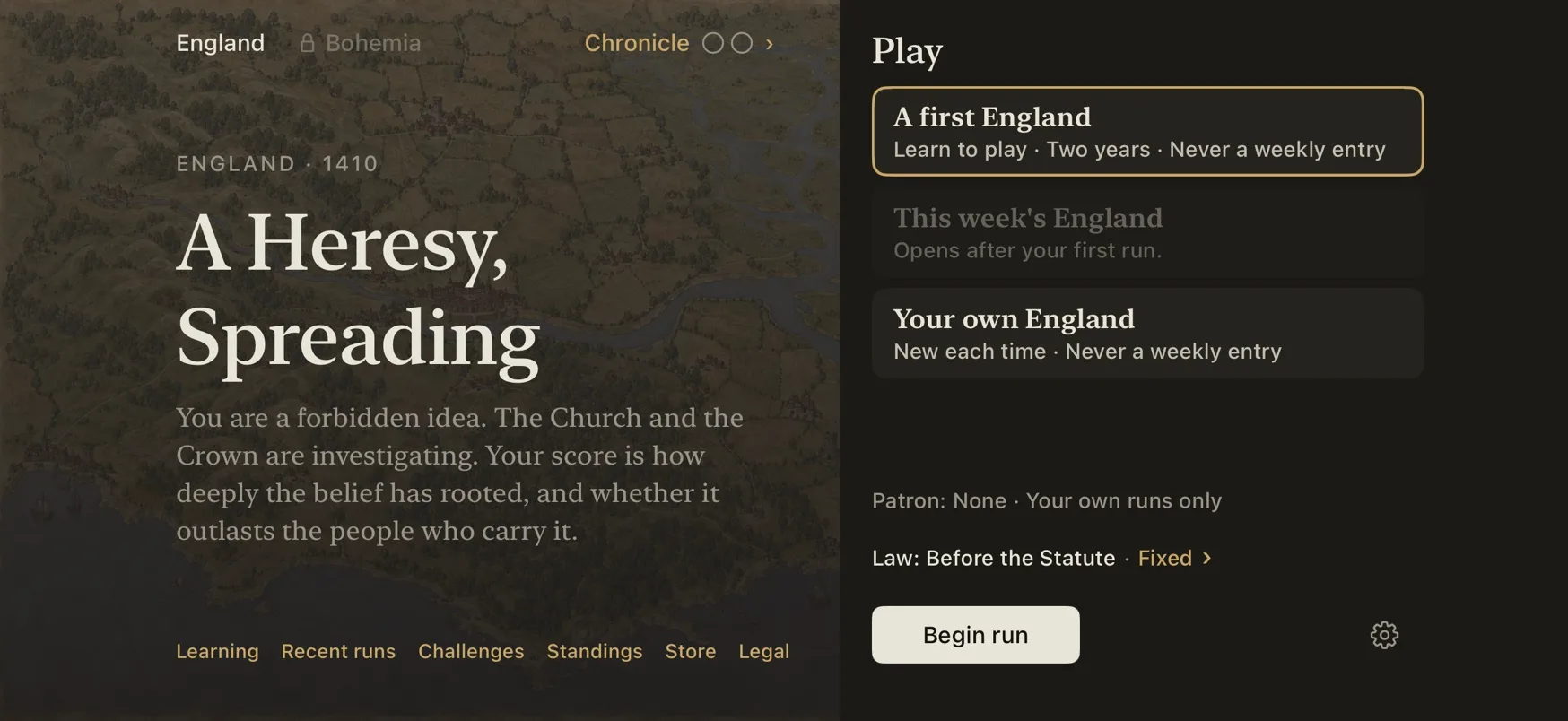
Where you begin: a first England, this week’s England, or your own. 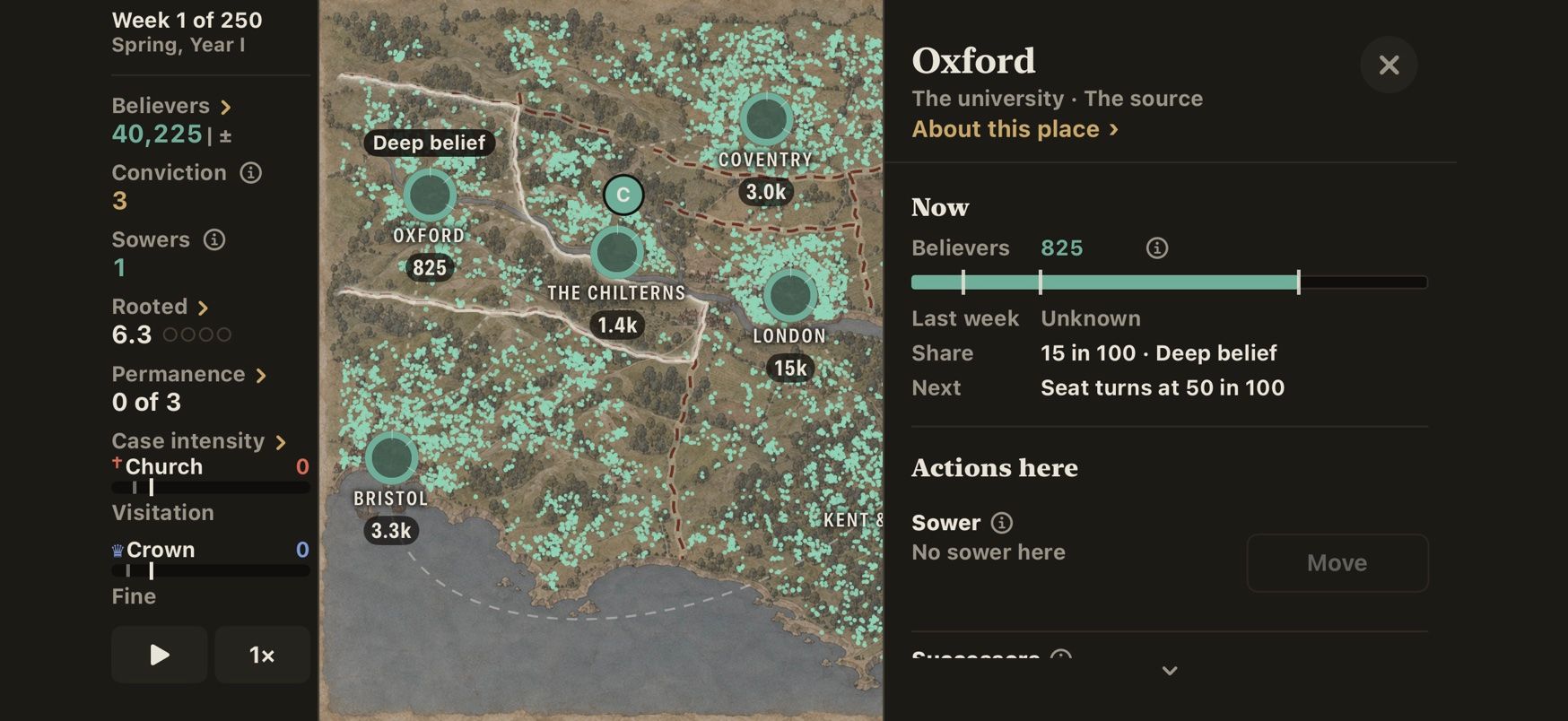
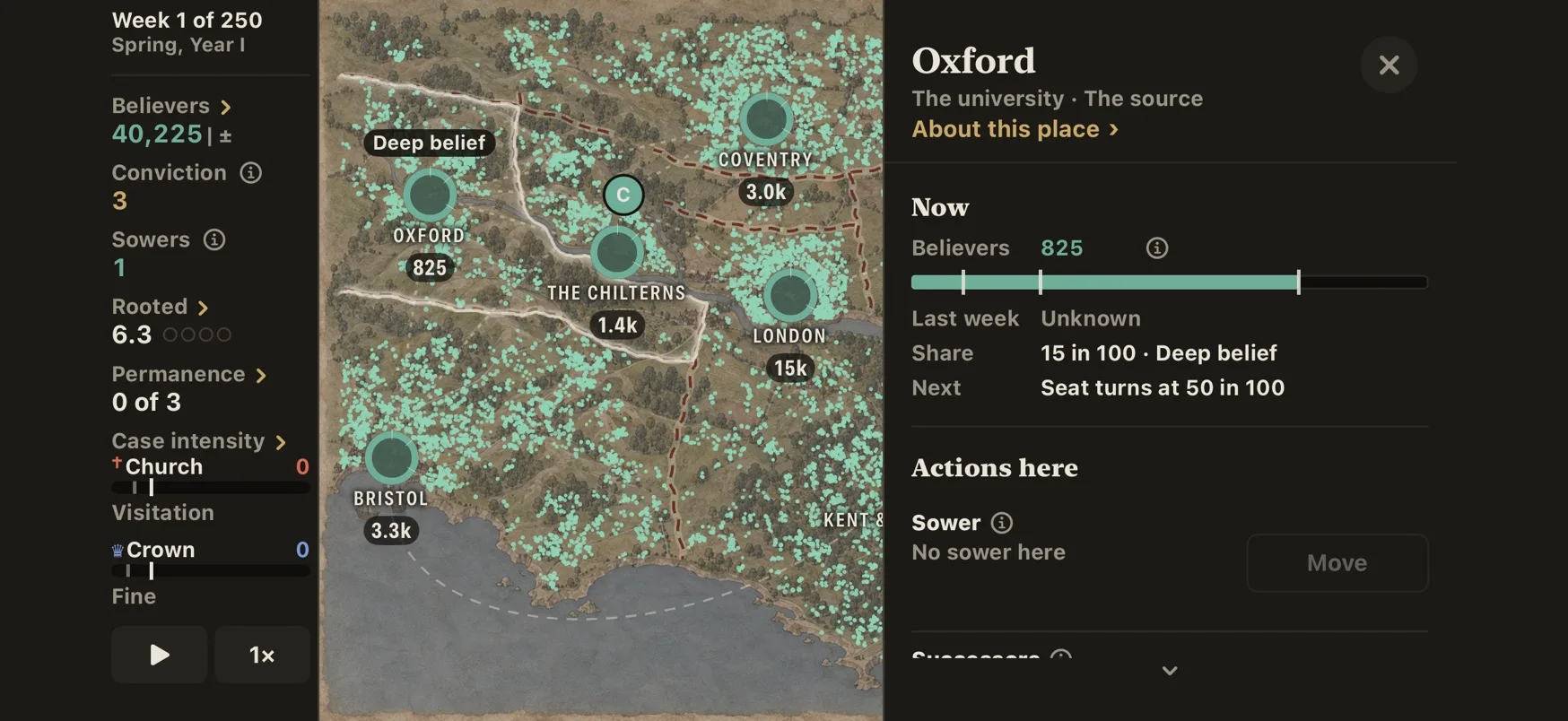
A county: how many believe, and what comes next. 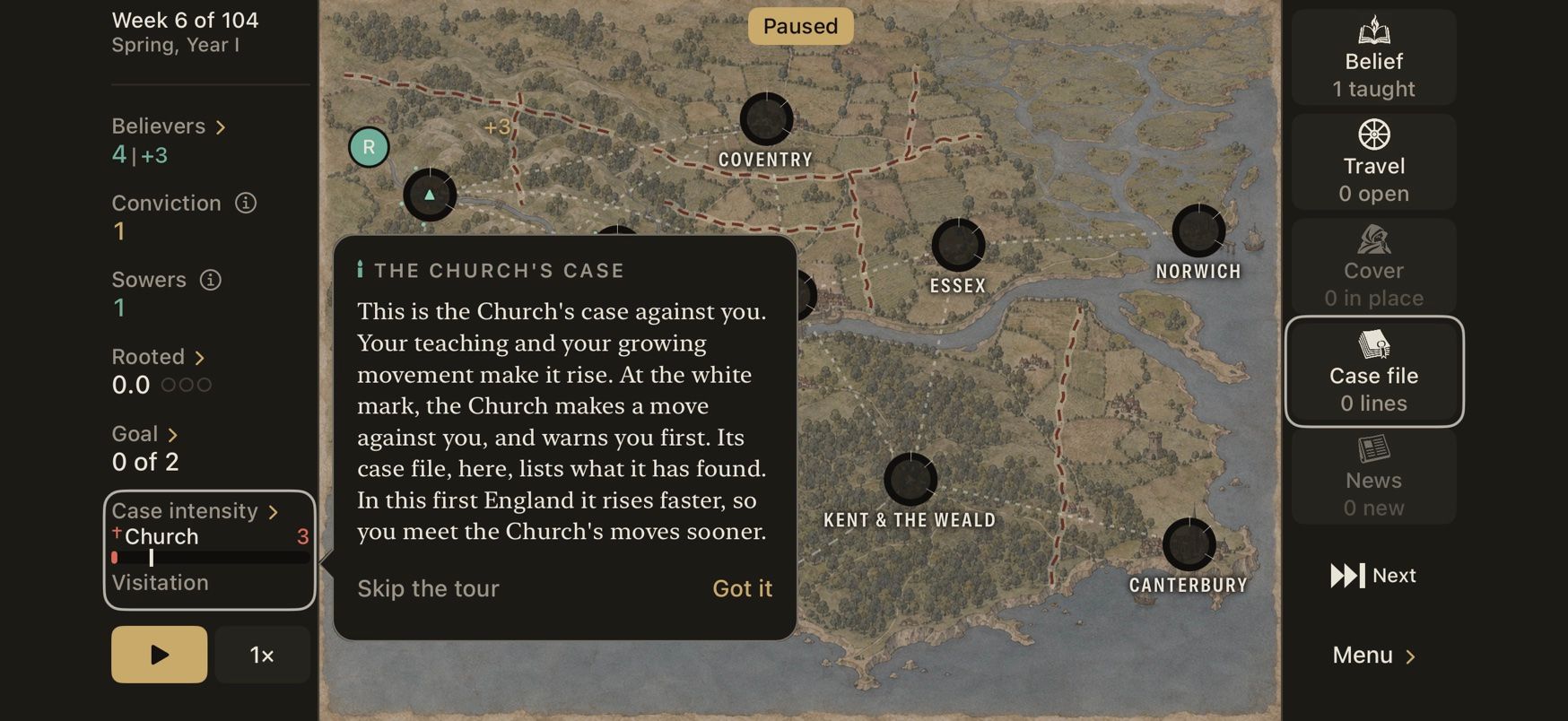
The tour explains the Church’s case. The five buttons are down the right. 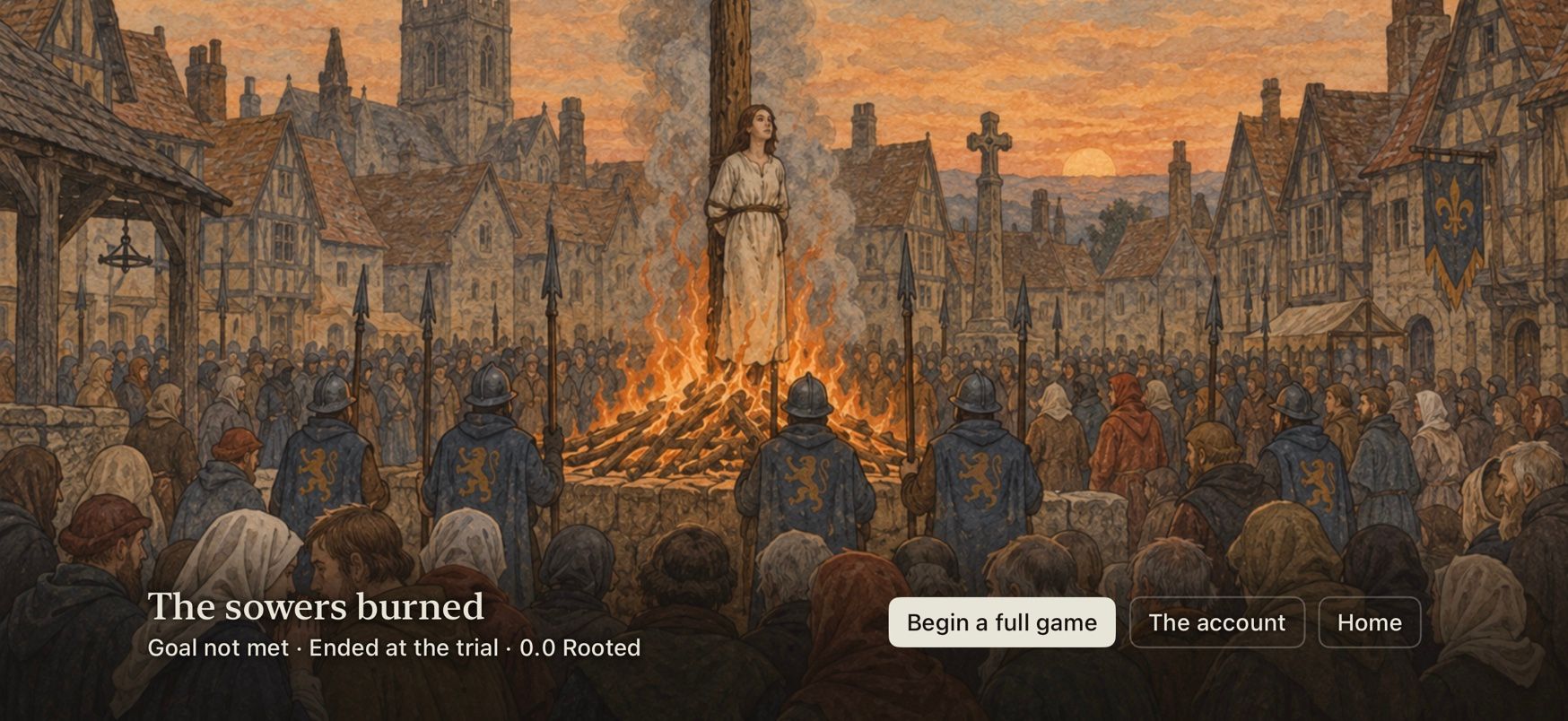
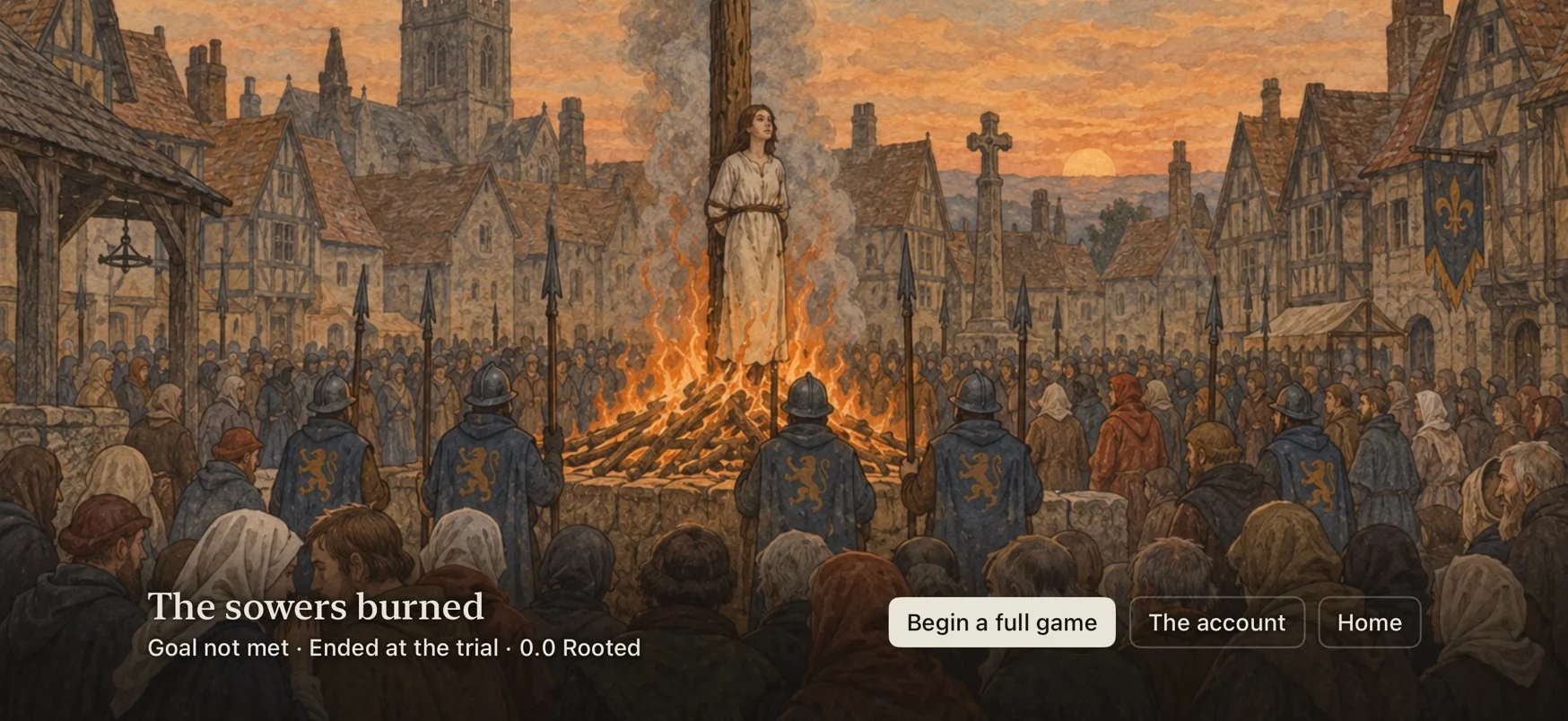
An ending: The sowers burned. 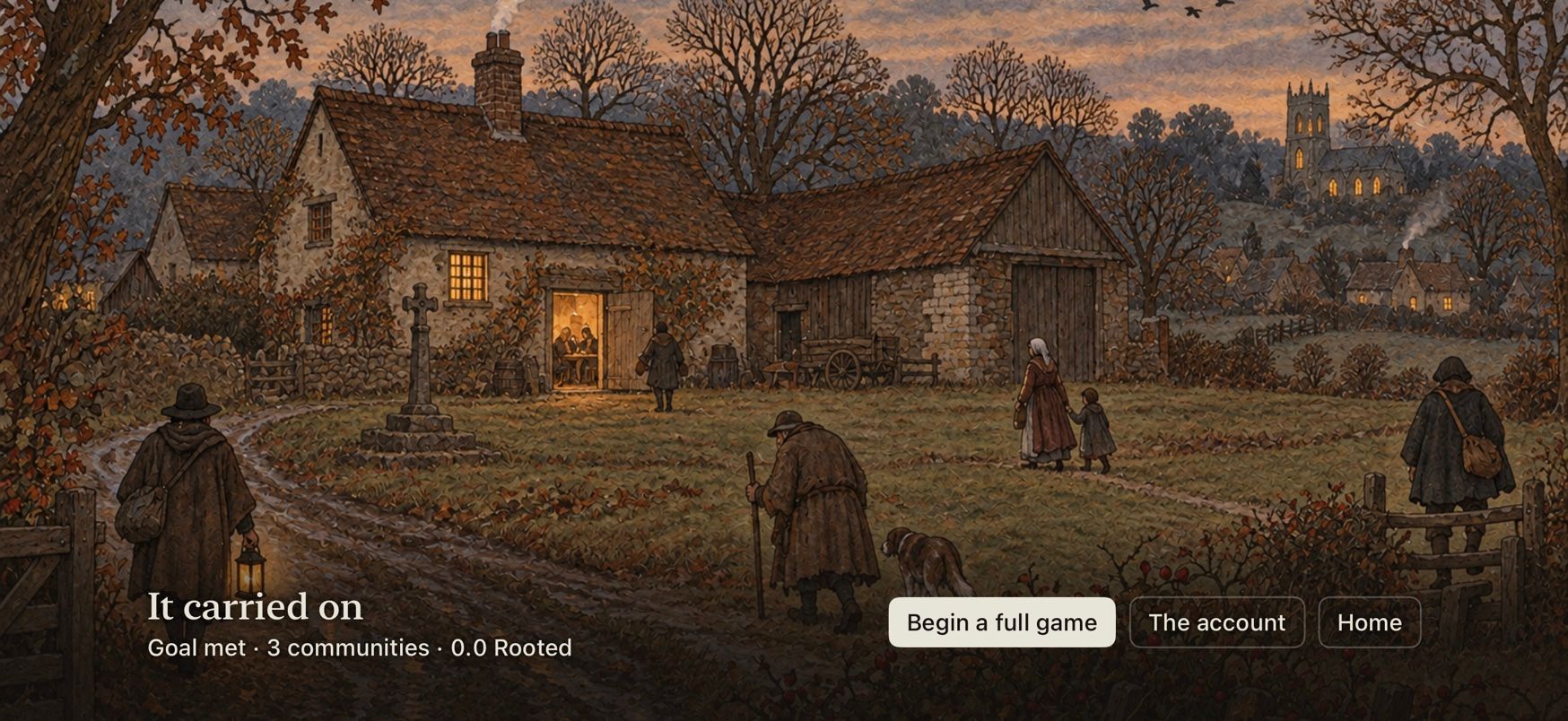
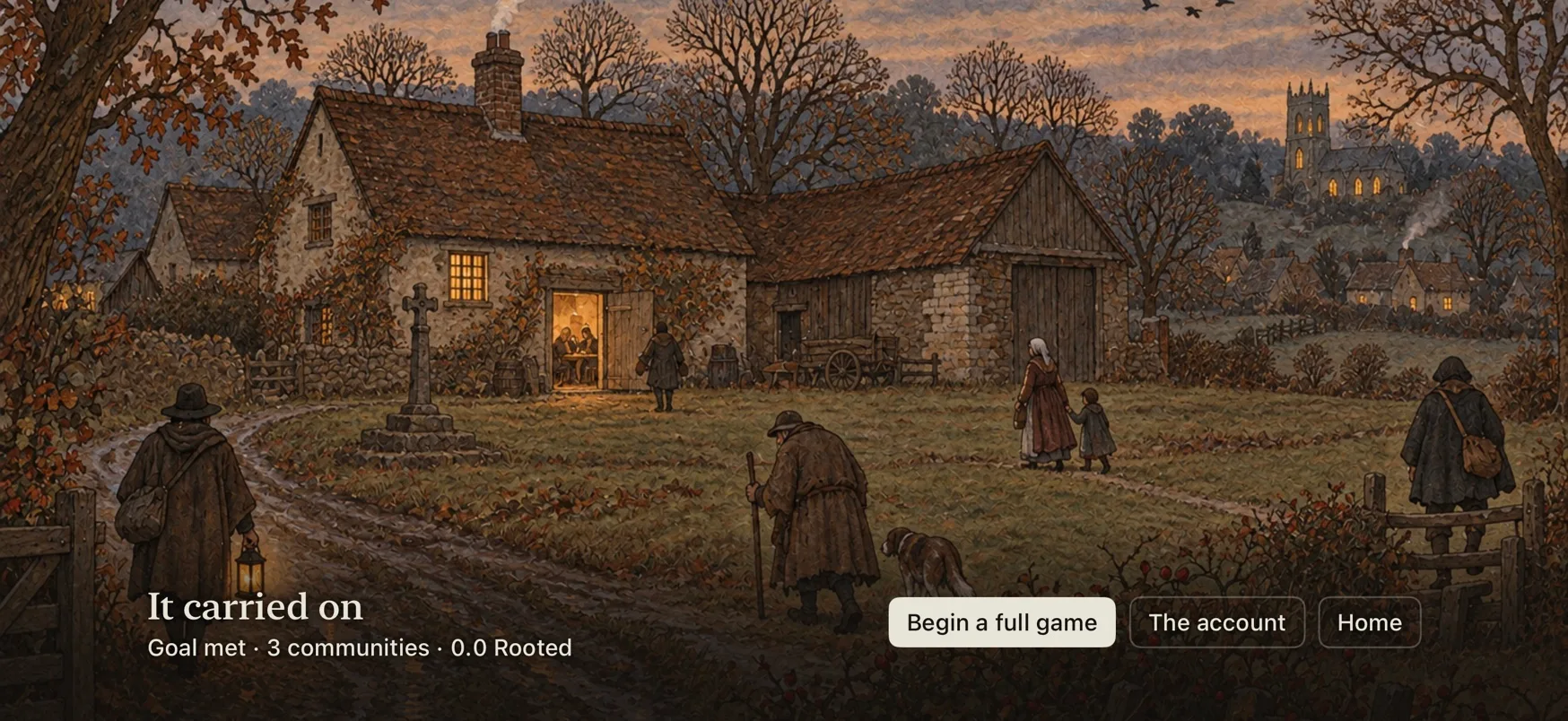
An ending: It carried on.
History
England before the Reformation
In the late fourteenth century, the Oxford theologian John Wycliffe taught that scripture belonged to everyone, in their own tongue, and that a Church grown rich and powerful had strayed from it. His followers, whom their enemies called Lollards, put the Bible into English and carried his teaching through households, workshops and market towns.
The Church and the Crown answered by enacting restrictive laws. A statute of 1401, De heretico comburendo, sent heretics who would not abjure, or who fell back after abjuring, to be burned. Archbishop Arundel’s Constitutions of 1409 forbade preaching without a licence and scripture in English without the Church’s permission. In 1410, the year the game begins, John Badby, a craftsman from Evesham, was burned at Smithfield.
The belief went underground. In the Chilterns it was still alive a century later.
The history is real. Every sower, clergyman and officer of the Crown you meet in a run is invented.
How deep will you root before they find you?
Free to download. A first England for learning, and each week’s England tournament, cost nothing to play. Your own Englands and Bohemia, 1415, are bought once, with nothing to renew.
Coming soonto the App Store, for iPhone
Bohemia, 1415, is in the game: where the word went after England.
Contact
Write to us
One address for questions about the game, help with it, and press.